Strength-Based and Neurodiversity-Affirming Collaborative
Centering strengths. Affirming identity.
We believe that neurodivergent youth thrive when adults meet them where they are, focus on strengths, and adapt the environment to their needs.
A practice rooted in presuming competence.
This simply means we believe every child is capable of learning, growing, and communicating. When a student struggles, we don't assume they can't do it. We look for how the environment can better support them.
Strength-based
We center what young people can do: their capacities, their interests, and their ways of knowing. We focus on these rather than cataloging what they can't do. Strengths come first because they are where genuine growth actually begins.
Neurodiversity-affirming
Autistic, disabled, and neurodivergent young people deserve to be understood on their own terms. We help the adults around them build practices that honor how youth actually experience the world.
Collaborative
Educators, clinicians, caregivers, and youth themselves are partners in this work. We view disabled and neurodivergent individuals as the true experts on their own experiences. We work collaboratively with the adults in their lives to build environments that reflect what youth actually need.
Who we are.
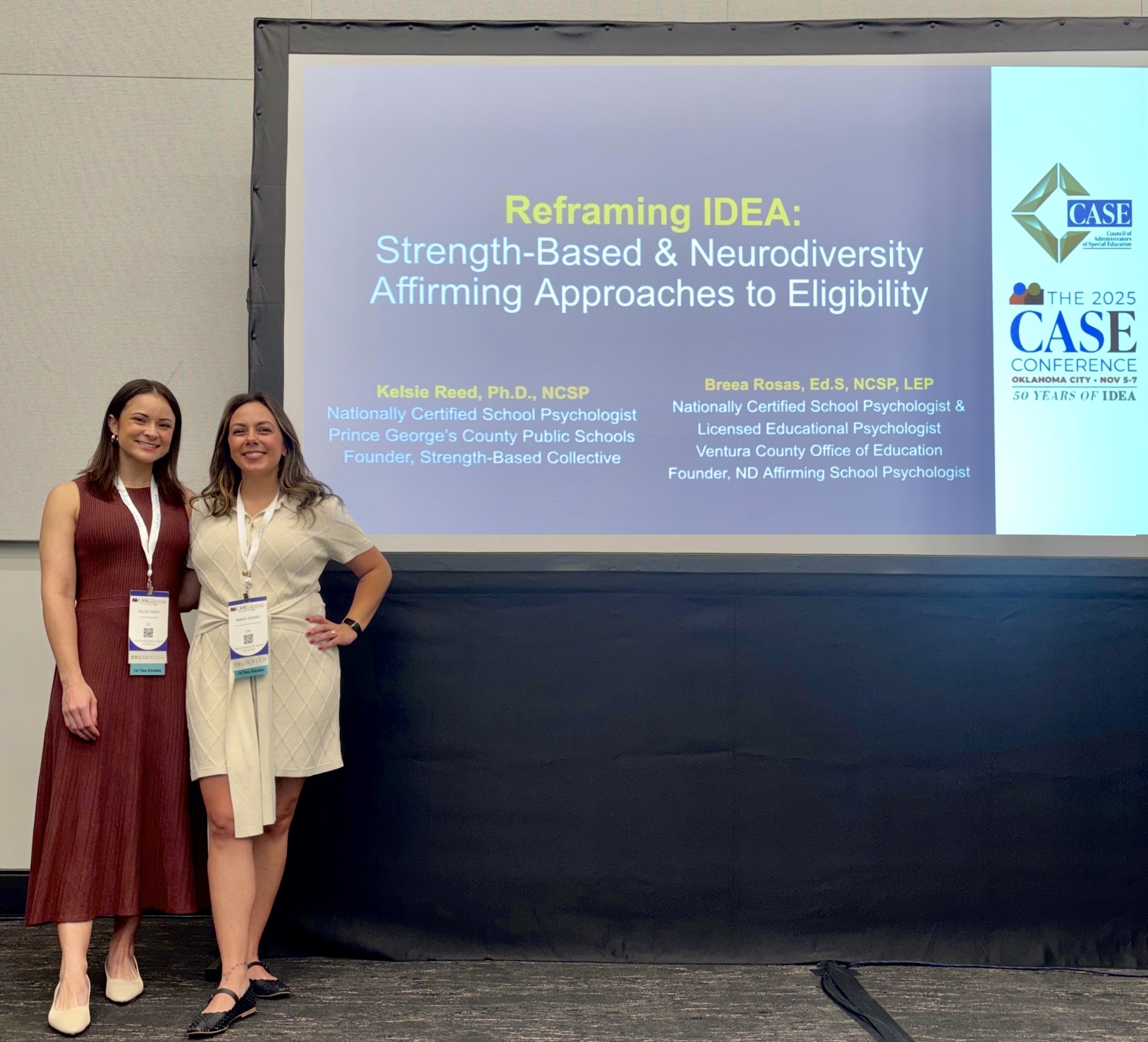
We are two school psychologists who believe strength-based and neurodiversity-affirming practice should be the default, not the alternative. Together we run the SBNA Collaborative, sharing resources for the field and connecting like-minded individuals together. We are also publishing a comprehensive book on psychological evaluations this fall/winter.
Meet the CollaborativeWork with us.
We offer professional development for districts, organizations, and conferences. We partner with educators, administrators, mental health professionals, related service providers, and families to explore topics ranging from strength-based assessment frameworks to building neurodiversity-affirming practices.
Explore Professional DevelopmentStart with our free resources.
Two free toolkits: one for parents and advocates, one for school psychologists and evaluation teams. Both reframe IDEA disability categories through an affirming, strength-based lens. New resources added regularly. Stay tuned.
Affirming IEP Toolkit for Parents
Understanding your child's special education disability.
Understanding your child's special education disability with affirming reframes, equity checks, and IEP advocacy examples for each category.
SBNA Eligibility Toolkit (SET)
A supplemental guide for affirming eligibility.
A supplemental guide for school-based teams running affirming special education eligibility determinations with reframed IDEA criteria.
Our book is coming this fall/winter.
Essentials of Strength-Based and Neurodiversity-Affirming School-Based Evaluations
As part of Wiley's Essentials of Psychological Assessment series, our book offers a comprehensive framework for completing school-based evaluations from a strength-based and neurodiversity-affirming lens.
Learn more + pre-order
Stay in touch.
We send occasional, thoughtful emails focusing on affirming practice, professional resources, and updates from the Collaborative.
Two school psychologists.
One shared paradigm.
Strength-based and neurodiversity-affirming practice should be the default, not the alternative.
SBNA Collaborative is a partnership between two school psychologists who consistently approached their work with the same fundamental goals, but from distinct entry points. One of us focused on building frameworks around strengths: emphasizing what young people can do, exploring conditions for success, and realizing what becomes possible when we lead with capacity. The other dedicated their work to neurodiversity-affirming practice: examining how educational systems change when we presume competence and recognize disability as a natural and valuable variation of the human experience.
We quickly realized we were speaking the same language. We decided to write a book about it, and established the Collaborative as a home for what comes next: resources, professional development, and a growing community of practitioners who are dedicated to shifting from a medical model of pathology to an affirming model of support.
We support educators, mental health professionals, related service providers, and the broader community of adults walking alongside young people. The Collaborative is intentionally a starting point. We anticipate bringing in more voices and perspectives over time to enrich this field and build truly inclusive environments.

Dr. Kelsie Reed
School Psychologist · Founder, Strength-Based Collective
Dr. Kelsie Reed is a school psychologist serving elementary and middle school students in Prince George's County Public Schools, Maryland. Born and raised in Michigan, she received her Ph.D. from Loyola University Chicago. Specializing in strength-based assessment and equitable education practices, she is co-author of Hacking Deficit Thinking and the founder of the Strength-Based Collective. Dr. Reed is passionate about advancing educational equity for minoritized students and disrupting the school-to-prison pipeline, driven by the belief that adult perception is one of the most powerful forces in shaping student trajectories.

Breea Rosas, EdS
LEP + NCSP · Founder, ND Affirming School Psychologist
Breea Rosas is a Nationally Certified School Psychologist and a Licensed Educational Psychologist. She is the founder of Neurodiversity Affirming School Psychologist, LLC: a practice dedicated to bringing neurodiversity-affirming approaches to the educational setting through professional development, consultation, and psychoeducational evaluations. Breea actively shares her expertise through professional development, having presented at numerous conferences nationwide including NASP and CASE. Breea helps educators and families move beyond traditional models to build truly inclusive environments.
Our mission.
To equip the adults in young people's lives with practical, affirming, strength-based tools. We aim to shift the focus from "fixing" the child to adapting the environment to fit their needs, ensuring disabled and neurodivergent youth are understood, accommodated, and celebrated for who they actually are.
How we approach our work.
Authentic
We ground our work in research, Disability Justice principles, and lived experience, with a specific focus on racial equity and the intersectionality of identities. We actively listen to and learn from the disabled community, ensuring our practices combat systemic harm and are shaped by those they impact most.
Adaptive
Whether you are a brand-new practitioner or a seasoned administrator, we provide practical tools to help you adapt systems to fit the individual, rather than forcing the individual to conform to the system.
Supportive
We assume good intent and presume competence for both students and the adults supporting them. True systemic change happens when we work alongside you as collaborative thought partners.
We are a Collaborative.
We intentionally named this space a Collaborative because we know this work cannot be done in a silo. We are actively seeking to partner with other practitioners, advocates, and voices in the field.
Have a framework, a resource idea, or a presentation you'd like to build together?
Professional Development.
Evidence-based, affirming training tailored for districts, organizations, and conferences across the country.
Workshops & Keynotes
We offer professional development for districts, organizations, and conferences. Our presentations are individualized to your team's unique needs, practical and actionable, rooted in research, and grounded in what actually works in our own practice as school psychologists.
Topics we cover
- Strength-based assessment and report writing frameworks
- Neurodiversity-affirming practice for multidisciplinary school teams
- Identity-first language and affirming communication strategies
- Supporting neurodivergent and disabled young people across settings
- Behavior as communication: shifting paradigms
- Building family-school partnerships through an affirming lens
Available Formats
We present locally, virtually, and are available to travel for conference presentations and single-day or half-day workshops.
Inquire for Pricing
Tell us more about your professional development needs and we will get back to you with tailored options.
Request a Quote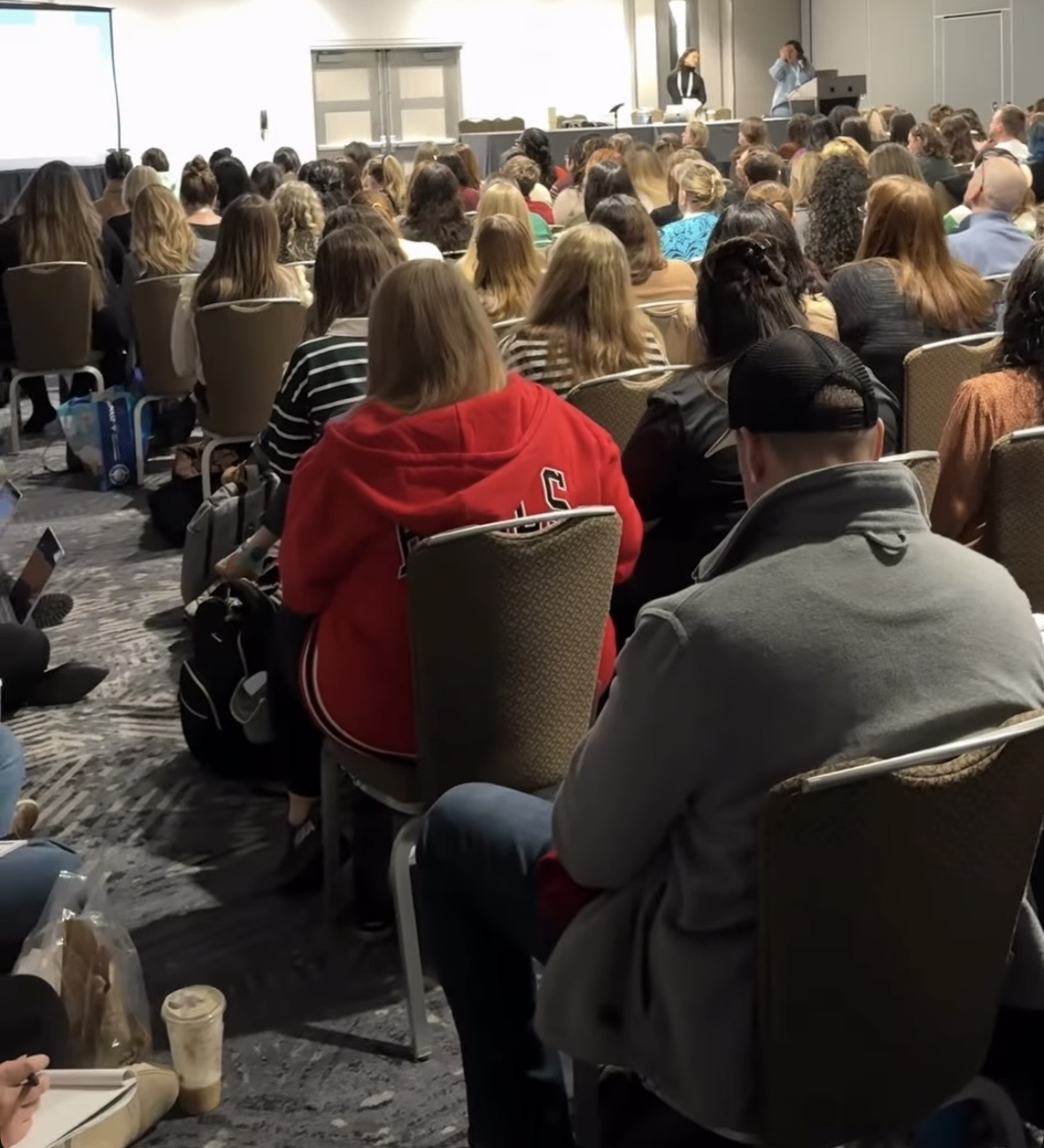
Where we have spoken & contributed
Upcoming Contributions
Presentations
-
NASP On-Demand Webinar
November 2026
Reframing IDEA: Strength-Based, Neurodiversity-Affirming Approaches to Eligibility
Register on NASP → -
Wisconsin School Psychologists Association Fall Conference
October 2026
Title TBD
Publications & Print
-
Essentials of SBNA School-Based Evaluations (Wiley)
Fall/Winter 2026
Co-authored comprehensive guide to affirming evaluations.
-
Educating Exceptional Children (16th Edition)
Upcoming
Featured contributors in the "Ask the Expert" series.
Recent Contributions
Presentations
-
Inclusive Schools & IEPs Summit: Virtual
July 2026
Elevating Support: Navigating Your Child's IEP with a Neurodiversity-Affirming Lens (Breea)
The Deficit Trap: Shifting to Strength-Based IEP Supports (Kelsie)
-
21st Annual Miller School Neuropsychology Conference: Virtual
March 2026
Affirming All Minds: Assessment and Support for Children with High Support Needs
-
NASP Annual Convention: Chicago, IL
February 2026
Strength-Based and Neurodiversity-Affirming Evaluations: A Practical Framework for School Psychologists
-
CASE Conference: Oklahoma City, OK
November 2025
Reframing IDEA: Strength-based & neurodiversity-affirming approaches to eligibility
-
NASP Annual Convention: Seattle, WA
February 2025
Igniting Potential: Redefining Assessments for Students with High Support Needs (Kelsie Reed, Breea Rosas, Lucia Serio, & Haley Biddanda)
Publications & Print
-
Neurodiversity-Affirming Occupational Therapy
Available Now
Contributed a vignette alongside Lucia Serio and Haley Biddanda.
View the book on JKP →
Not sure where to start?
Let us know what you are looking for! We will point you toward the format that fits best or gladly refer you to colleagues in the field if another expert is better suited to your needs.
Contact Us →Tools for the field.
Free downloads, conversation guides, and reference sheets built for practitioners and caregivers, drawn from evidence-based frameworks. New resources added regularly. Stay tuned.
Affirming IEP Toolkit for Parents
Understanding your child's special education disability.
A 14-page guide built for parents and advocates of disabled and neurodivergent young people. Walks through all 13 IDEA disability categories with four lenses for each: the IEP Paperwork Description, an Affirming Parent Reframe, an Equity Check that names bias often present in eligibility, Essential Learning Supports, and a sample IEP Advocacy Example you can adapt for your child's next meeting.
SBNA Eligibility Toolkit (SET)
A supplemental guide for affirming eligibility.
Built for multidisciplinary teams. Bridges traditional IDEA criteria with strength-based, neurodiversity-affirming language. Includes reframed eligibility definitions, profile-based Likert rating scales, and a specialized Eligibility Determination Summary that frames "adverse effect" as the mismatch between a student's profile and the traditional education setting.
Essentials of Strength-Based and Neurodiversity-Affirming School-Based Evaluations
A comprehensive and practical roadmap for engaging in strength-based and neurodiversity-affirming school-based evaluations. Our book applies the core ideals of our approach to the evaluation process for youth with disabilities, ensuring identification of strengths, support needs, and recommendations from an affirming lens.
By Dr. Kelsie Reed + Breea Rosas, EdS · Publishing Fall/Winter 2026
Pre-order on Wiley
What's inside
Most evaluation training is historically built around measuring what students cannot do. This book is constructed around who they actually are. Drawing on the frameworks that anchor our Collaborative, we guide school-based evaluators through conducting affirming evaluations that satisfy IDEA criteria while honoring the student's authentic profile.
Across the chapters, you will find:
- Reframed definitions of all 13 IDEA eligibility categories that lead with support needs rather than inherent deficits.
- Practical frameworks for affirming intake conversations, observation, assessment, and team collaboration.
- Report-writing guidance that documents disability and educational impact through an environmental-mismatch lens.
- Case examples drawn from real school-based clinical practice.
- Tools designed for adaptation by multidisciplinary teams aiming to shift systemic practice.
Who it is for
- School psychologists conducting special education evaluations
- Speech-language pathologists, OTs, and related service providers
- Special education coordinators and administrators guiding departmental practices
- Graduate students and trainees in school psychology programs
Pre-order today.
Available now for pre-order directly from Wiley. Amazon, Bookshop.org, and other retailers will be available closer to the release date.
Pre-order on WileyGet in touch.
Inquiries about professional development, collaboration pitches, or just to connect: drop us a note.
Message sent!
Thanks for reaching out. We have received your message and will get back to you as soon as we can.
Send another messageInclusive Schools & IEPs Summit
Thank you for attending the summit! Enter your email below to download your All-Access Pass resource.
Affirming IEP Toolkit for Parents
A 14-page guide walking through all 13 IDEA disability categories with affirming reframes, equity checks, and sample IEP advocacy examples for your child's next meeting.
Privacy Policy
Last updated: July 2026
1. Introduction
Welcome to SBNA Collaborative. We respect your privacy and are committed to protecting your personal data. This privacy policy will inform you as to how we look after your personal data when you visit our website (regardless of where you visit it from) and tell you about your privacy rights and how the law protects you.
2. The Data We Collect About You
Personal data, or personal information, means any information about an individual from which that person can be identified. We may collect, use, store and transfer different kinds of personal data about you, including Identity Data (first name, last name) and Contact Data (email address) when you voluntarily subscribe to our newsletter, download resources, or contact us.
3. How We Use Your Personal Data
We will only use your personal data when the law allows us to. Most commonly, we will use your personal data to provide you with the resources you requested, manage our relationship with you, and send you our newsletter (if you have opted in). We use MailerLite as our email marketing platform. By subscribing, you acknowledge that your information will be transferred to MailerLite for processing.
4. Data Security
We have put in place appropriate security measures to prevent your personal data from being accidentally lost, used, or accessed in an unauthorized way, altered, or disclosed.
5. Contact Us
If you have any questions about this privacy policy or our privacy practices, please contact us at info@sbnacollaborative.com.
Terms of Use
Last updated: July 2026
1. Acceptance of Terms
By accessing and using the SBNA Collaborative website, you accept and agree to be bound by the terms and provision of this agreement. The resources provided on this site are for informational and educational purposes only.
2. Intellectual Property
All content, resources, toolkits, logos, graphics, and text on this website are the intellectual property of SBNA Collaborative (Dr. Kelsie Reed and Breea Rosas) unless otherwise noted. You may download and use our free resources for personal or professional use, but you may not sell, redistribute, or claim our materials as your own original work.
3. Disclaimer of Liability
The materials on SBNA Collaborative's website are provided on an 'as is' basis. SBNA Collaborative makes no warranties, expressed or implied, and hereby disclaims and negates all other warranties including, without limitation, implied warranties or conditions of merchantability, fitness for a particular purpose, or non-infringement of intellectual property or other violation of rights. The information provided does not constitute formal legal or psychological advice.
4. Links
SBNA Collaborative has not reviewed all of the sites linked to its website and is not responsible for the contents of any such linked site. The inclusion of any link does not imply endorsement by SBNA Collaborative of the site.